
professional website design

How a Professional Website Turns Visitors Into Paying Customers

professional website design

You have about 7 seconds. That’s how long a visitor spends deciding whether to stay on your website or leave. If your site doesn’t immediately communicate trust, clarity, and value  they’re gone. And with them, a potential sale.

A professionally built website isn’t just a digital business card. It’s your hardest-working salesperson available 24/7, never calls in sick, and can serve hundreds of customers at once. Here’s exactly how it turns strangers into paying customers.

1. First Impressions Build Instant Trust

People judge websites the same way they judge physical stores. A cluttered, outdated, or slow-loading site signals unprofessionalism — even if your service is excellent. A clean, modern design with consistent branding tells visitors: this business takes itself seriously, so it’ll take me seriously too.

Trust is the foundation of every purchase decision, and your website either builds it or destroys it in seconds.

2. Clear Messaging Answers “What’s In It For Me?”

The biggest mistake business owners make is talking about themselves instead of their customer. A professional website is structured to immediately answer: What do you offer? Who is it for? Why should I choose you? 

When a visitor lands on your homepage and instantly understands how you solve their problem, they stay  and they explore.

3. Strategic Calls-to-Action Guide Visitors to Act

Visitors rarely convert on their own. They need gentle direction. A professional website design places calls-to-action (CTAs)  like “Get a Free Quote,” “Book a Call,” or “Shop Now”  at exactly the right moments in the user journey.

Without these prompts, even interested visitors leave without doing anything.

4. Mobile Optimization Captures Every Opportunity

Over 60% of web traffic comes from mobile devices. If your site looks broken or is hard to navigate on a phone, you’re handing customers to your competitors. A professional developer builds your site to work flawlessly on every screen size.

5. Speed = Sales

A one-second delay in page load time can reduce conversions by up to 7%. Professional developers optimize images, code, and hosting so your site loads fast, keeping impatient visitors from bouncing before they even see your offer.

6. SEO Brings the Right People to Your Door

A beautiful site that no one finds is just an expensive hobby. professional website design built with SEO best practices baked in , proper headings, meta descriptions, fast load times, and clean code . so search engines rank you higher and send you qualified traffic .

Conclusion

Your website is either working for you or against you ,  there’s no middle ground. When built with intention and expertise, it becomes a conversion machine that builds trust, communicates value, and turns curious visitors into loyal paying customers.

Ready to turn your website into your best sales tool? Let’s talk.

website hosting

What Is Website Hosting and Why Does It Matter for Your Business?

website hosting

You have built a beautiful website , but where does it actually live? Many business owners have their website up and running without ever fully understanding what website hosting is or why it matters. This post explains everything in plain English.

What Is Website Hosting?

Every website is made up of files , images, pages, code, and data. Website hosting is a service that stores all of those files on powerful computers called servers, which are connected to the internet 24 hours a day. When someone types your web address into their browser, their device connects to that server and downloads your website files so they can see your site.
Think of hosting like renting a space in a building. Your website is the shop, and the hosting server is the building it sits in. The quality of the building directly affects how well your shop performs.

Types of Website Hosting

1. Shared Hosting

Your website shares server space with hundreds of other websites. This is the most affordable option and works well for small business websites with modest traffic. The downside is that if another website on the same server gets a lot of traffic, it can slow yours down.

2. VPS Hosting (Virtual Private Server)

You get a dedicated portion of a server’s resources, even though other websites are on the same physical machine. This is faster and more reliable than shared hosting, and suits growing businesses with increasing traffic.

3. Dedicated Hosting

You get an entire server to yourself. This is the most powerful and expensive option, suited for large businesses with very high traffic volumes.

4. Cloud Hosting

Your website runs across multiple servers simultaneously. This is highly reliable — if one server has an issue, another takes over seamlessly. Popular for businesses that need consistent uptime and scalability.

Why Does Your Hosting Choice Matter?

1. Website Speed

Cheap, overcrowded shared hosting often leads to slow loading times. A site that takes 5 seconds to load can lose over 50% of its visitors before they even see your content. Premium hosting providers offer faster server hardware and better infrastructure.

2. Uptime and Reliability

Uptime refers to the percentage of time your website is accessible. Good hosting providers offer 99.9% uptime guarantees. If your site is down, you are losing customers and revenue. Cheap hosting often comes with poor uptime

website hosting

3. Security

Quality hosting providers offer security features like firewalls, malware scanning, and regular backups. Poor hosting leaves your site vulnerable to attacks that can take it offline or compromise customer data.

4. Customer Support

When something goes wrong with your website at 2am, you need reliable support. Premium hosting providers offer 24/7 live chat and phone support. Budget hosts often provide slow, unhelpful responses through email ticketing systems.

What Should You Look for in a Hosting Provider?

⦁ 99.9% or higher uptime guarantee
⦁ Fast server speeds and modern hardware (SSD storage)
⦁ Automatic daily backups
⦁ Free SSL certificate included
⦁ 24/7 customer support
⦁ Easy scalability as your business grows
⦁ Servers located close to your target audience

Conclusion

Website hosting is the invisible backbone of your online presence. Investing a little more in quality hosting pays dividends in speed, reliability, and security — all of which directly affect your customer experience and search engine rankings. Do not cut corners on hosting.

Not sure if your current hosting is good enough? Contact us for a free hosting review — we’ll tell you if you’re on the right plan.

WordPress vs custom website

WordPress vs Custom Website: Which Is Right for Your Business?

WordPress vs custom website

One of the most common questions business owners ask when planning a new website is: should I go with WordPress vs custom website built from scratch? Both options have genuine strengths and the right choice depends entirely on your business goals, budget, and needs.
In this post, we break down both options clearly so you can make an informed decision.

What Is WordPress?

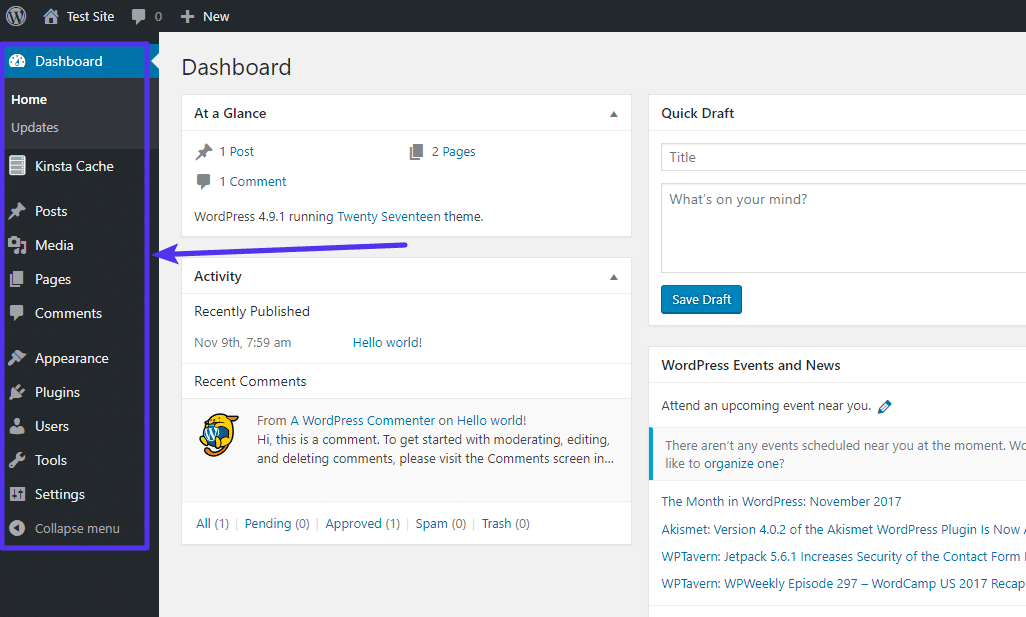
WordPress is a content management system (CMS) — a platform that allows you to build and manage a website without needing to write code from scratch. It powers over 40% of all websites on the internet, from small business sites to major news publications like The New York Times.
WordPress uses a combination of themes (which control how your site looks) and plugins (which add functionality like contact forms, SEO tools, and online shops). Many web developers build professional business websites on WordPress because it is fast to build, easy to manage, and highly flexible.

WordPress vs custom website

What Is a Custom Website?

A custom website is built entirely from scratch by a developer using code — typically HTML, CSS, JavaScript, and a back-end language like PHP or Node.js. Nothing is pre-built. Every element is designed and coded specifically for your business.

WordPress: The Pros

⦁ Faster and more affordable to build — great for most small to medium businesses
⦁ Easy for business owners to update content themselves without coding knowledge
⦁ Thousands of plugins available for almost any feature you need
⦁ Large community of developers — easy to find support
⦁ Built-in SEO capabilities with plugins like Yoast or RankMath
⦁ Scales well — WordPress can handle large, complex sites

WordPress: The Cons

⦁ Requires regular updates and maintenance to stay secure
⦁ Heavily reliant on third-party plugins, which can sometimes conflict
⦁ Less flexibility for very unique or complex functionality
⦁ Can be slower than a custom site if not properly optimised

Custom Website: The Pros

⦁ Complete creative and technical freedom — built exactly to your specifications
⦁ Potentially faster and more lightweight since there is no CMS overhead
⦁ Better for complex, unique web applications and platforms
⦁ No dependency on third-party plugins or themes
⦁ Can be more secure since there is no widely-known CMS to target

WordPress vs custom website

Custom Website: The Cons

⦁ Significantly more expensive to build — often 3 to 10 times the cost of WordPress
⦁ Takes much longer to develop
⦁ Every update or change typically requires a developer
⦁ No plugin ecosystem — every feature must be built from scratch
⦁ Harder to hand over to a new developer if you change agencies

Which Should You Choose?

For the vast majority of small and medium businesses, WordPress is the right choice. It delivers a professional, fast, and scalable website at a fraction of the cost of a custom build — and it gives you the freedom to manage your own content.
A custom website makes more sense if you are building a complex web application, a bespoke platform, or a product that simply cannot be achieved with existing WordPress tools. For a business brochure site, service website, or even a basic e-commerce store, WordPress is excellent.

Conclusion

The WordPress vs custom debate is less about which is ‘better’ and more about what is right for your specific situation. A skilled web developer can build an outstanding website on either platform. The key is choosing the tool that matches your goals, timeline, and budget — and then executing it well.

Not sure which option is right for you? We offer free consultations to help you make the best decision for your business. 

WordPress vs custom website 

why my website is not ranking on Google

Why Your Website Is Not Ranking on Google (And How to Fix It)

why my website is not ranking on Google

If your website is not showing up on Google, you are invisible to potential customers.

Many Nigerian businesses invest in building a website but forget one critical thing — visibility.

A website that doesn’t rank is like opening a shop in a hidden street with no signboard.

Let’s break down the real reasons your website isn’t ranking and how to fix it.

1. Your Website Has No SEO Structure

Search engines need structure to understand your content.

If your website:

  • Has multiple H1 tags

  • Uses headings incorrectly

  • Has no meta descriptions

  • Has poor URL structure

Google will struggle to rank it.

Websites built properly with WordPress allow structured SEO setup using tools like Yoast SEO.

How to Fix It:

  • Use only one H1 per page

  • Add optimized meta titles and descriptions

  • Use clean URLs (example.com/web-design-lagos)

  • Install and configure Yoast SEO correctly

2. You’re Not Targeting the Right Keywords

Many business owners write content based on what they think — not what customers are searching for.

For example:
Instead of writing “Our Digital Solutions”, target:

Keyword research is critical.

How to Fix It:

  • Use keyword research tools

  • Target long-tail keywords

  • Focus on search intent

  • Optimize one primary keyword per page


3. Your Website Is Too Slow

Speed is a ranking factor.

If your site:

  • Loads slowly

  • Has large uncompressed images

  • Uses poor hosting

It will struggle to rank.

Google prioritizes fast-loading websites because users prefer speed.

How to Fix It:

  • Compress images

  • Use caching plugins

  • Upgrade to quality hosting

  • Minimize unnecessary plugins

4. You Don’t Have Enough Content

Google ranks websites that demonstrate authority.

If your website has only:

  • Home page

  • About page

  • Contact page

That’s not enough.

Blogging consistently builds keyword relevance and authority.

How to Fix It:

  • Publish SEO-optimized blog posts weekly

  • Create service-specific pages

  • Answer common customer questions

  • Build topic clusters

5. You Have No Backlinks

Backlinks are links from other websites pointing to yours.

They act like votes of confidence.

Without backlinks, ranking becomes harder.

How to Fix It:

  • Get listed in directories

  • Publish guest posts

  • Share valuable content

  • Build partnerships

6. Your Website Is Not Mobile-Friendly

More than 70% of Nigerian users browse via mobile devices.

If your site is not responsive, it hurts both user experience and ranking.

Builders like Elementor make it easier to design mobile-friendly layouts when configured correctly.

How to Fix It:

  • Test on multiple devices

  • Adjust font sizes

  • Optimize mobile spacing

  • Improve mobile loading speed

7. Your Website Is Too New

SEO takes time.

If your website is less than 3–6 months old, ranking may take patience — especially in competitive niches.

Consistency wins.

How Long Does SEO Take in Nigeria?

SEO is not instant.

Depending on competition and keyword difficulty, it can take:

  • 3–6 months for moderate competition

  • 6–12 months for competitive industries

But once your website ranks, the traffic is organic and consistent.

Final Thoughts

If your website is not ranking on Google, it’s usually because of:

  • Poor SEO setup

  • Wrong keywords

  • Slow speed

  • Weak content

  • No backlinks

  • Poor mobile experience

The good news? Every one of these problems can be fixed.

Want to Rank Your Website Higher?

If you’re serious about increasing visibility and attracting organic traffic, explore our professional SEO services in Nigeria and let’s position your website where your customers can actually find you.

why my website is not ranking on Google

hire web designer in Nigeria

7 Things to Consider Before Hiring a Web Designer in Nigeria

hire web designer in Nigeria

7 Things to Consider Before Hiring a Web Designer in Nigeria

If you’re planning to hire a web designer in Nigeria, you need to be careful.

The wrong choice can cost you money, time, and even damage your brand reputation. Many businesses rush into website projects without asking the right questions and they end up with slow, poorly designed, or non-functional websites.

If you’re searching for a professional website developer in Nigeria, it’s important to understand what separates experts from amateurs.

Before you commit to any developer or agency, here are 7 important things you must consider.

1. Check Their Portfolio Carefully

The first thing to look at is their portfolio.

A professional web designer should be able to show you:

  • Live websites they’ve built

  • Different industries they’ve worked with

  • Modern and clean designs

  • Mobile-responsive layouts

Don’t just look at screenshots. Visit the actual websites. 

Ask yourself:

  • Does it look professional?

  • Is it easy to navigate?

  • Does it load fast?

  • Does it look good on mobile?

If their past work doesn’t impress you, your website likely won’t either.

2. Ask About SEO Knowledge

Many web designers focus only on design — not search engine visibility.

But what’s the point of having a beautiful website if nobody finds it on Google?

When hiring a web designer in Nigeria, ask:

  • Will the site be SEO-optimized?

  • Do they set up proper heading structure?

  • Will they optimize speed?

  • Do they install SEO plugins like Yoast?

A website should be built for both users and search engines.

Search Engine Optimization (SEO) helps websites rank higher on Google.

3. Understand Their Development Process

A professional developer should have a clear process.

Typical process should include:

  1. Discovery & requirements gathering
  2. Planning & structure
  3. Design mockup (if applicable)
  4. Development
  5. Testing
  6. Launch
  7. Post-launch support

If someone says, “Just pay and I’ll start,” without a clear workflow, that’s a red flag.

A structured process means fewer surprises and better results.

4. Discuss Timeline Clearly

One of the biggest issues businesses face is delay.

Before hiring, ask:

  • How long will the project take?

  • What could cause delays?

  • What do you need from me to meet deadlines?

Typical timelines:

  • Business website: 2–4 weeks

  • E-commerce website: 3–6 weeks

Avoid developers who promise unrealistically fast delivery unless it’s a very simple project.

Quality takes time.

5. Ask About Post-Launch Support

Your website doesn’t end at launch.

After going live, you’ll need:

  • Security updates

  • Plugin updates

  • Backup management

  • Minor content edits

  • Technical fixes

Ask clearly:

  • Do you offer maintenance plans?

  • What happens if something breaks?

  • Is support included?

Without post-launch support, you may struggle later.

6. Confirm Website Ownership

This is extremely important.

Before paying, confirm:

  • Will you own the website?

  • Will you get full admin access?

  • Will the domain be registered in your name?

  • Will hosting be under your control?

Some developers lock clients out or register domains in their own name.

Always ensure:
You own your website fully.

7. Compare Value — Not Just Price

Many businesses make one big mistake:

They choose the cheapest option.

But in web development, cheap often means:

  • Poor coding

  • Slow website speed

  • No SEO setup

  • No security optimization

  • No long-term support

Instead of asking:
“How cheap can you do it?”

Ask:
“What value am I getting for this price?”

A professionally built website is an investment — not an expense.

It’s important to understand realistic website pricing before making a decision.

Common Mistakes to Avoid When Hiring a Web Designer

Here are some quick mistakes to avoid:

  • Not signing an agreement

  • Paying 100% upfront without milestones

  • Not discussing revisions

  • Ignoring mobile optimization

  • Forgetting SEO


Being informed protects you.

Why Hiring the Right Web Designer Matters

Your website is your digital storefront.

It influences:

  • First impressions

  • Customer trust

  • Lead generation

  • Sales conversion

  • Brand credibility

A professional web design company in Nigeria understands local business needs, payment integrations like Paystack or Flutterwave, and how to build websites that convert visitors into customers.

Choosing wisely makes all the difference.

Final Thoughts

If you’re planning to hire a web designer in Nigeria, take your time.

Ask the right questions.
Review their past work.
Understand their process.
Focus on value — not just price.

A well-built website can transform your business and create long-term growth.

Need a Reliable Web Designer in Nigeria?

If you’re looking for a professional, SEO-focused, and results-driven web designer in Nigeria, Kelvins Tech is here to help.

We build:

  • Fast-loading websites

  • Mobile-optimized designs

  • SEO-ready structures

  • Conversion-focused pages

Contact us today to discuss your project and get started.

website cost in Nigeria

How Much Does It Cost to Build a Website in Nigeria? (2026 Detailed Pricing Guide)

website cost in Nigeria

If you’re running a business in Nigeria today, having a website is no longer optional — it’s a necessity. One of the first questions business owners ask is:

“How much does it cost to build a website in Nigeria?”

The answer isn’t one-size-fits-all. Website pricing in Nigeria depends on the type of website, features, design quality, level of customization, and the experience of the website developer.

This guide breaks down realistic website costs in Nigeria, what affects pricing, and how to avoid costly mistakes when hiring a web designer.

If you’re looking for a professional website developer in Nigeria, choosing the right pricing and features is critical.


Why Website Pricing in Nigeria Varies So Much

You may see:

  • ₦50,000 offers on WhatsApp
  • ₦300,000 professional quotes
  • ₦1,500,000+ agency proposals

They are not the same product.

Website cost depends on:

  • Business goals
  • Functionality
  • Design quality
  • SEO readiness
  • Support & scalability

Understanding this helps you choose value, not just price.


Average Cost of Building a Website in Nigeria

1. Basic Business Website

₦200,000 – ₦350,000

This is ideal for:

  • Small businesses
  • Startups
  • Personal brands
  • Local service providers

What you get:

  • 3–5 pages (Home, About, Services, Contact)
  • Mobile-responsive design
  • Contact form & WhatsApp integration
  • Basic on-page SEO
  • Social media links

Limitations:

  • Minimal customization
  • Limited SEO strategy
  • Basic design templates

2. Professional Business Website

₦350,000 – ₦700,000

Best for:

  • Growing businesses
  • Consultants
  • Corporate brands
  • Businesses competing online

What you get:

  • Custom UI/UX design
  • SEO-optimized page structure
  • Faster load speed
  • Conversion-focused layout
  • Google Search Console & Analytics setup

This type of website is built to attract traffic and convert visitors into leads.


3. E-commerce Website

₦600,000 – ₦1,500,000+

Ideal for:

  • Online stores
  • Product-based businesses
  • Retail brands

Features include:

  • Product catalog & categories
  • Paystack / Flutterwave integration
  • Cart & checkout system
  • Order & inventory management
  • Customer accounts

Most e-commerce websites in Nigeria integrate Paystack or Flutterwave for online payments.

Why it costs more:
E-commerce websites require advanced functionality, security, and performance optimization.


4. Custom Web Applications

₦1,500,000 and above

Used by:

  • Large organizations
  • Startups
  • Platforms with custom workflows

Examples:

  • Booking platforms
  • Dashboards
  • Portals
  • Membership systems

These are tailor-made solutions, not templates.

According to Google’s search guidelines, fast-loading and mobile-friendly websites perform better in search results.


Factors That Affect Website Cost in Nigeria

1. Type & Complexity of Website

The more pages and features you need, the higher the cost.


2. Design Customization

  • Template-based websites are cheaper
  • Custom designs improve branding and trust but cost more

3. Website Features

Extra features that increase cost:

  • Online payments
  • Booking systems
  • Live chat
  • Multi-language support
  • CRM integrations

4. Content Creation

If you don’t have:

  • Website copy
  • Images
  • Blog content

Your developer may create them — at an extra cost.


5. SEO & Performance Optimization

SEO-ready websites:

  • Rank better on Google
  • Load faster
  • Convert better

This requires extra work and expertise.


Why Extremely Cheap Websites Are Risky

Websites built very cheaply often:

  • Use pirated themes
  • Load slowly
  • Have security vulnerabilities
  • Don’t rank on Google
  • Look unprofessional on mobile

In many cases, businesses end up paying twice — once for a cheap site and again to rebuild it properly.


Website Cost vs Value: What Really Matters

Instead of asking:
“How cheap can I get a website?”

Ask:
“Will this website bring customers?”

A well-built website:

  • Builds trust
  • Generates leads
  • Supports long-term growth
  • Improves brand credibility

How to Choose the Right Website Developer in Nigeria

Before hiring, always:

  • Review previous projects
  • Ask about SEO strategy
  • Confirm mobile responsiveness
  • Clarify ownership of website files
  • Ask about post-launch support

Avoid developers who:

  • Can’t explain their process
  • Promise instant Google rankings
  • Offer unrealistic pricing

How Long Does It Take to Build a Website in Nigeria?

Typical timelines:

  • Simple website: 7–10 days
  • Business website: 10–21 days
  • E-commerce website: 3–6 weeks

Delays usually come from:

  • Late content submission
  • Frequent design changes
  • Feature additions mid-project

Final Thoughts

The cost of building a website in Nigeria depends on quality, purpose, and long-term goals.

A professionally built website is not an expense — it’s a business asset.

If your website:

  • Looks professional
  • Loads fast
  • Ranks on Google
  • Converts visitors

Then it pays for itself.


Why Your Small Business Needs a Website Now More Than Ever in 2025

In today’s digital-first world, a website is no longer a luxury, but a necessity for small businesses. It’s an essential tool to drive growth, build credibility, and expand your online presence. At Kelvin’s Tech, we believe that a well-designed website is crucial for businesses to succeed online.

Constant Accessibility, Wider Reach

Your website is open 24/7, providing potential customers with the convenience to learn about your services or products anytime, anywhere. This constant accessibility leads to a wider audience reach, more potential leads, and ultimately, more sales.

Establish Credibility and Trust

A professionally designed website builds credibility and trust with your target audience. In today’s digital age, consumers expect businesses to have a website. A well-designed website showcases your brand’s identity and values, helping to establish your business as a legitimate and trustworthy player in your industry.

Effective Marketing and SEO

A website is a cost-effective marketing tool that can be optimized for search engines (SEO) to increase your online visibility. By ranking higher in search engine results, you can drive more traffic to your website and attract potential customers who are actively searching for your products or services.

Engage and Connect with Customers

A website is a two-way communication channel that allows you to engage with your customers, gather feedback, and build relationships. With features like contact forms, blog comments, and social media links, you can foster a community around your brand and establish yourself as an industry thought leader.

Showcase Your Products and Services

Your website is the perfect platform to showcase your products or services with high-quality images, videos, and customer testimonials. By showcasing your offerings in a compelling and visually appealing way, you can differentiate your business from competitors and attract more customers.

Take Your Business to the Next Level

At Kelvins Tech, we specialize in designing engaging, responsive, and SEO-friendly websites that can help your small business make a significant impact online. Contact us today to see how we can help you grow your digital presence and achieve your business goals!